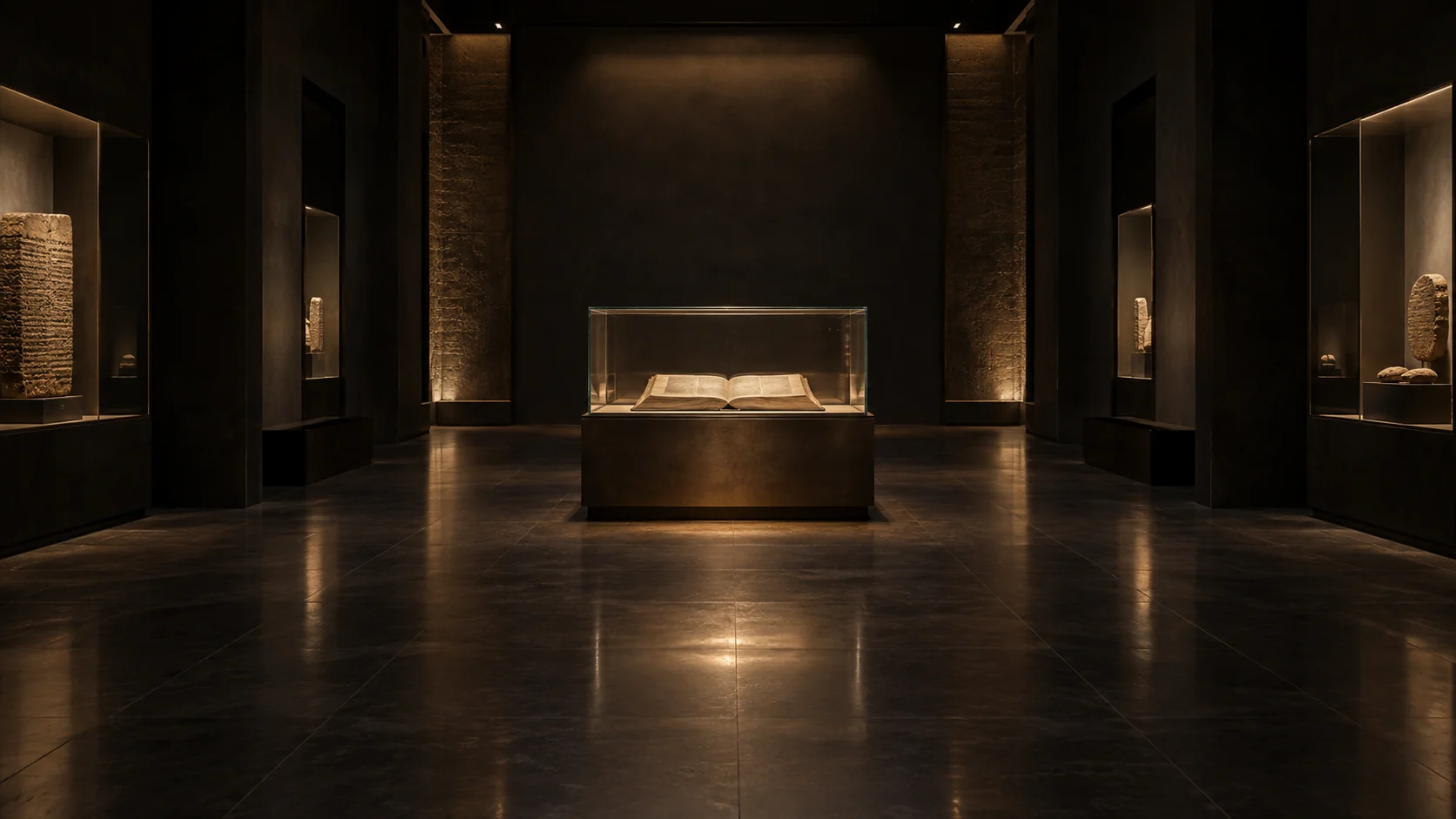
ENTER THE ARCHIVE
A manuscript
is evidence.
Move closer. The page holds proportion, pressure, spacing and the memory of a hand.
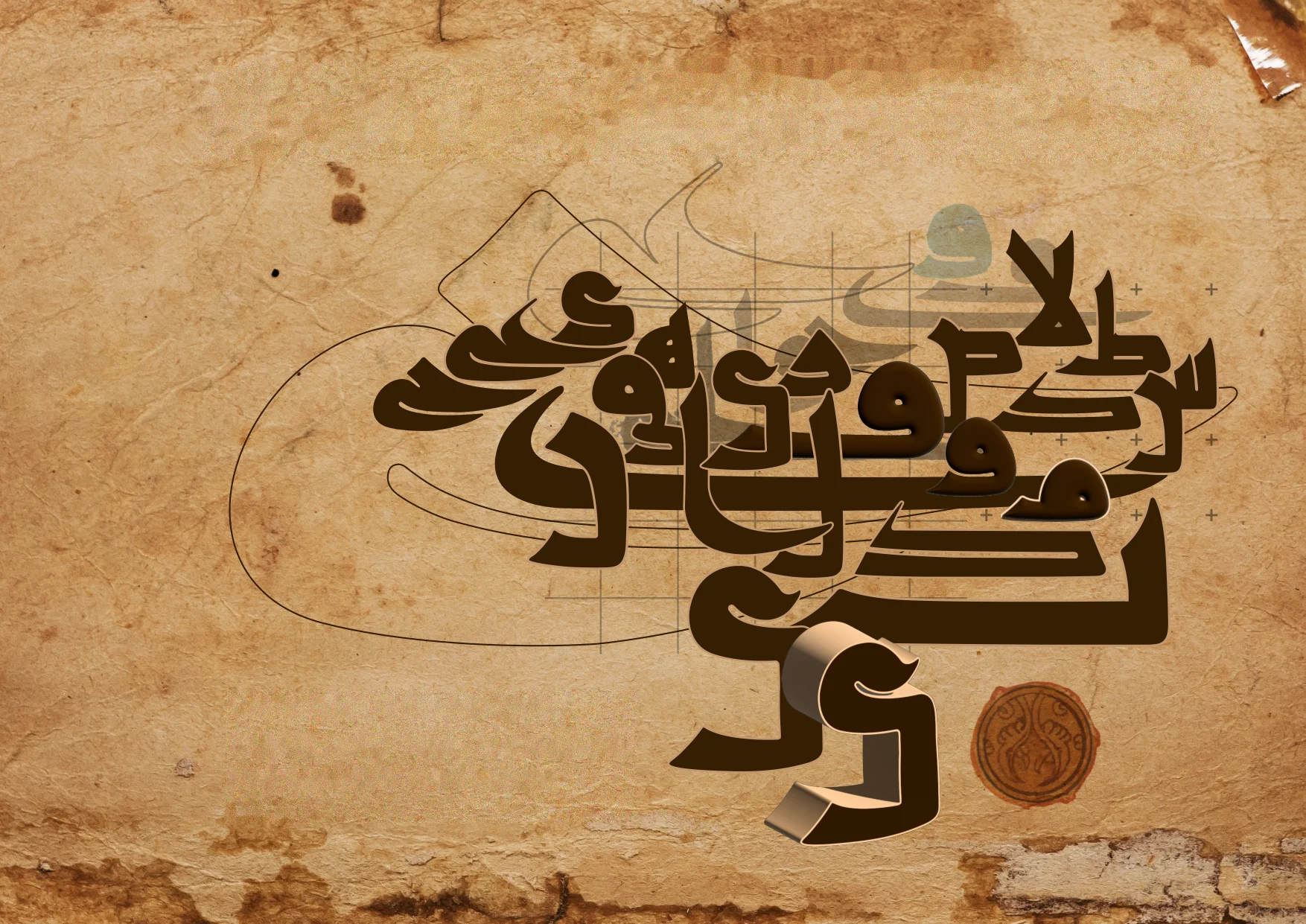
01 / Search the field. Find the forms.
Move across the manuscript to uncover the shapes. Then take the same alphabet into the free composition studio.
02 / FROM EVIDENCE TO TYPE
ENTER THE ARCHIVE
Move closer. The page holds proportion, pressure, spacing and the memory of a hand.
NOT ONE PAGE. A FIELD OF SOURCES.
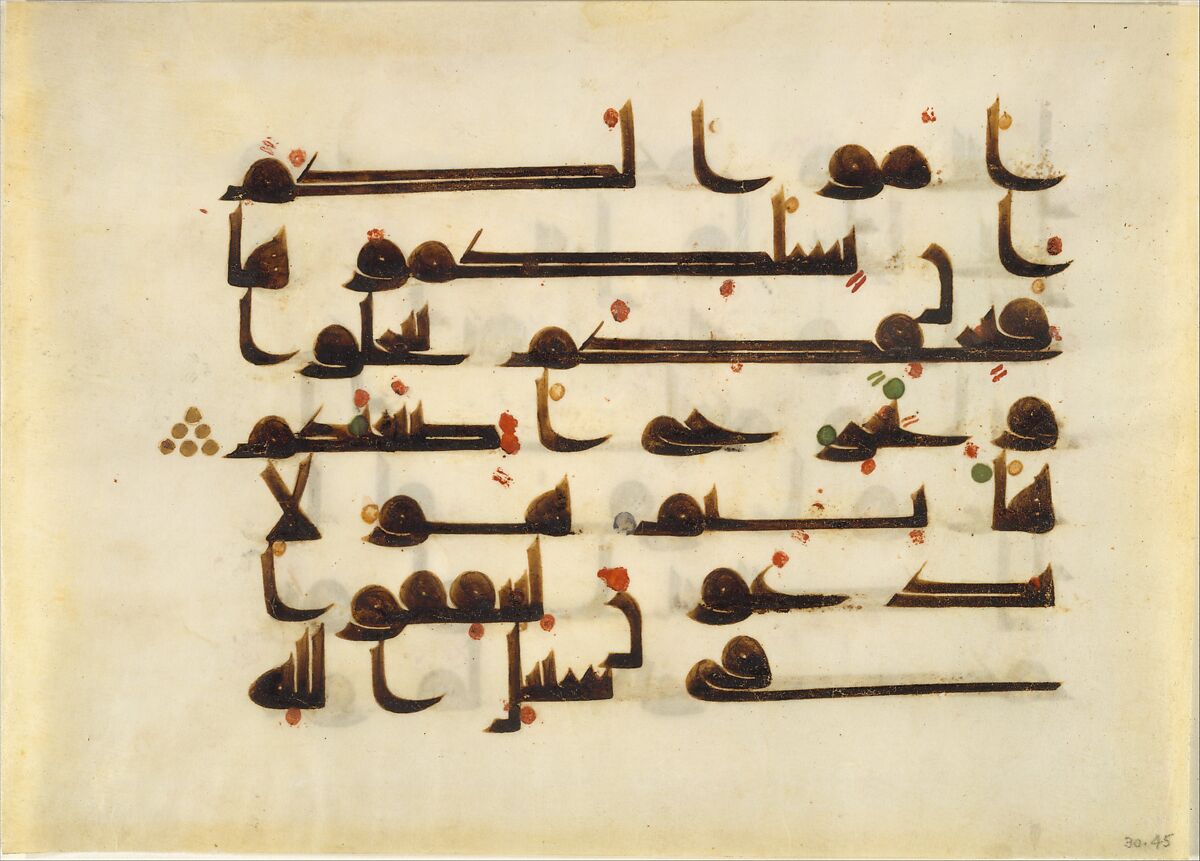
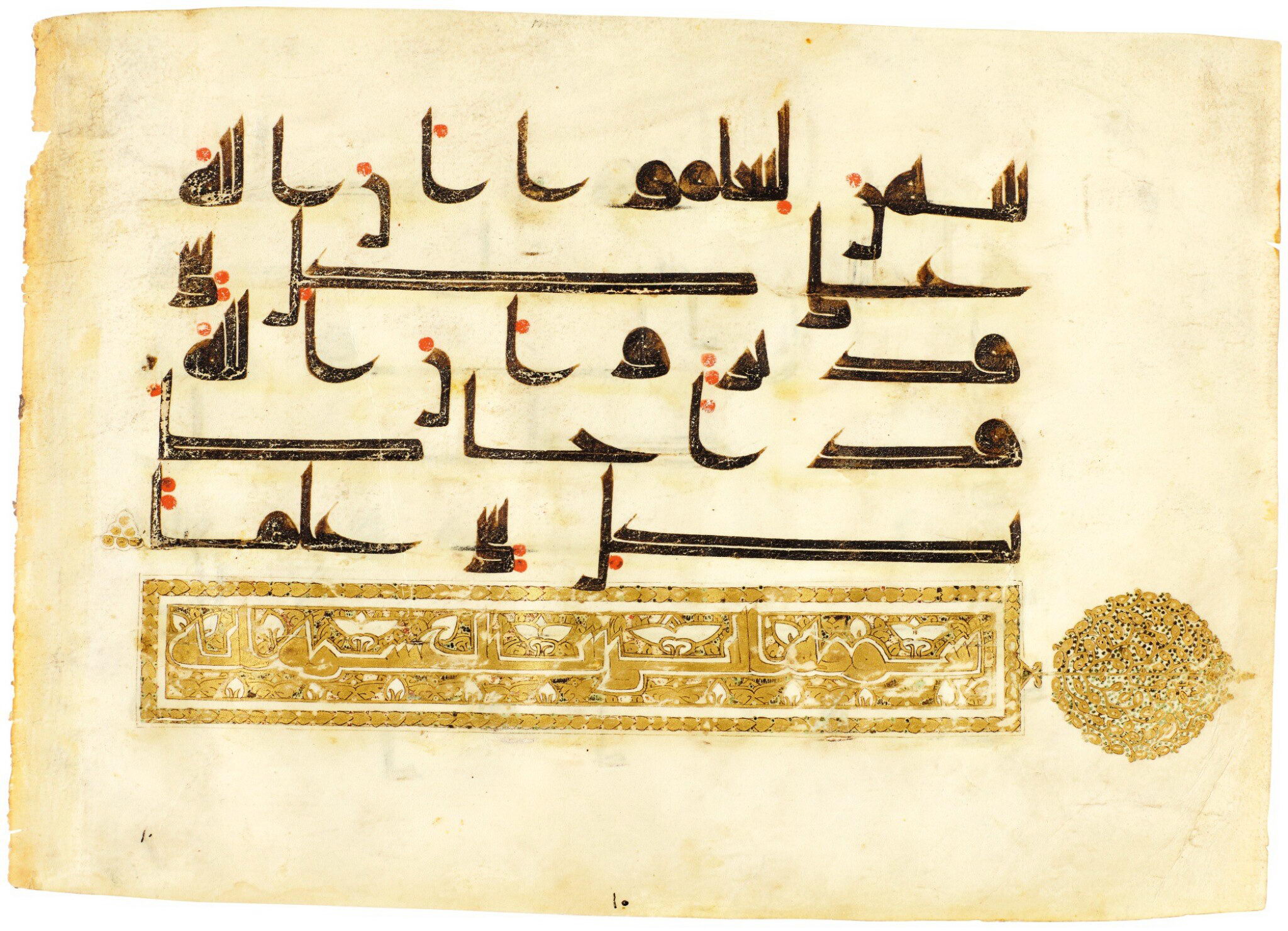
This typeface was reconstructed through the study of many surviving early manuscripts—seeking the closest credible system to ancient Kufic practice, never claiming descent from a single folio.
CAMERA / OVERHEAD STUDY
The camera turns above the glass and the complete folio fills the field—before any letter is isolated or interpreted.
REFERENCE → OUTLINE → GLYPH MATCH
The manuscript stays locked beneath the drawing. Finished glyphs return to closely related handwritten forms for an optical fit test, then dissolve into the page. Small deviations express deliberate design judgement—not error or a claim of exact copying.
A HISTORICALLY INFORMED INTERPRETATION
Not a facsimile of one page: a contemporary vector system that preserves the character of early Kufic while making careful design choices for consistency and use.
03 Source studies / reconstruction
The typeface was developed through comparison across many early manuscript sources. This study view keeps historical material and digital reconstruction side by side without presenting any single folio as the sole origin.
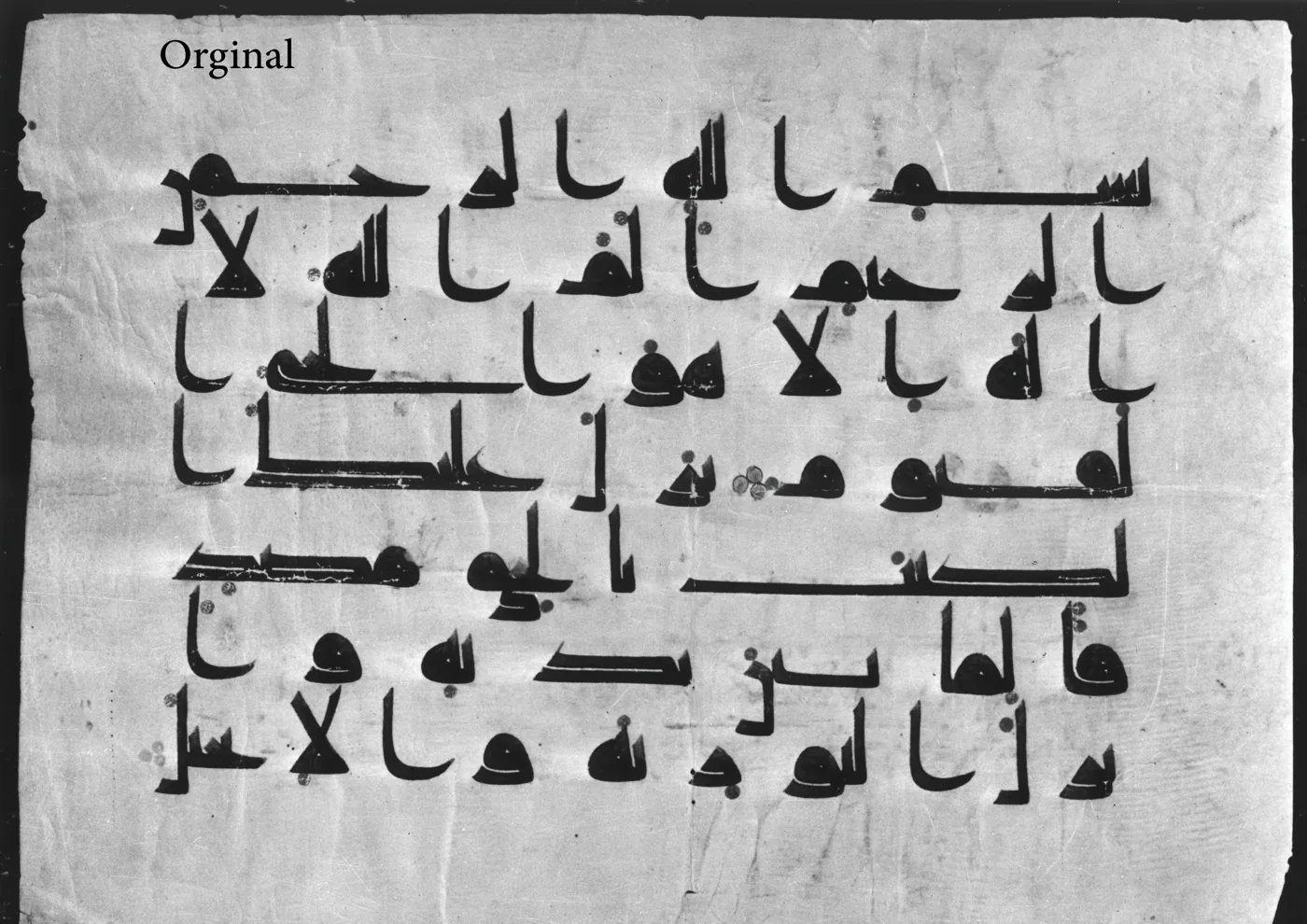
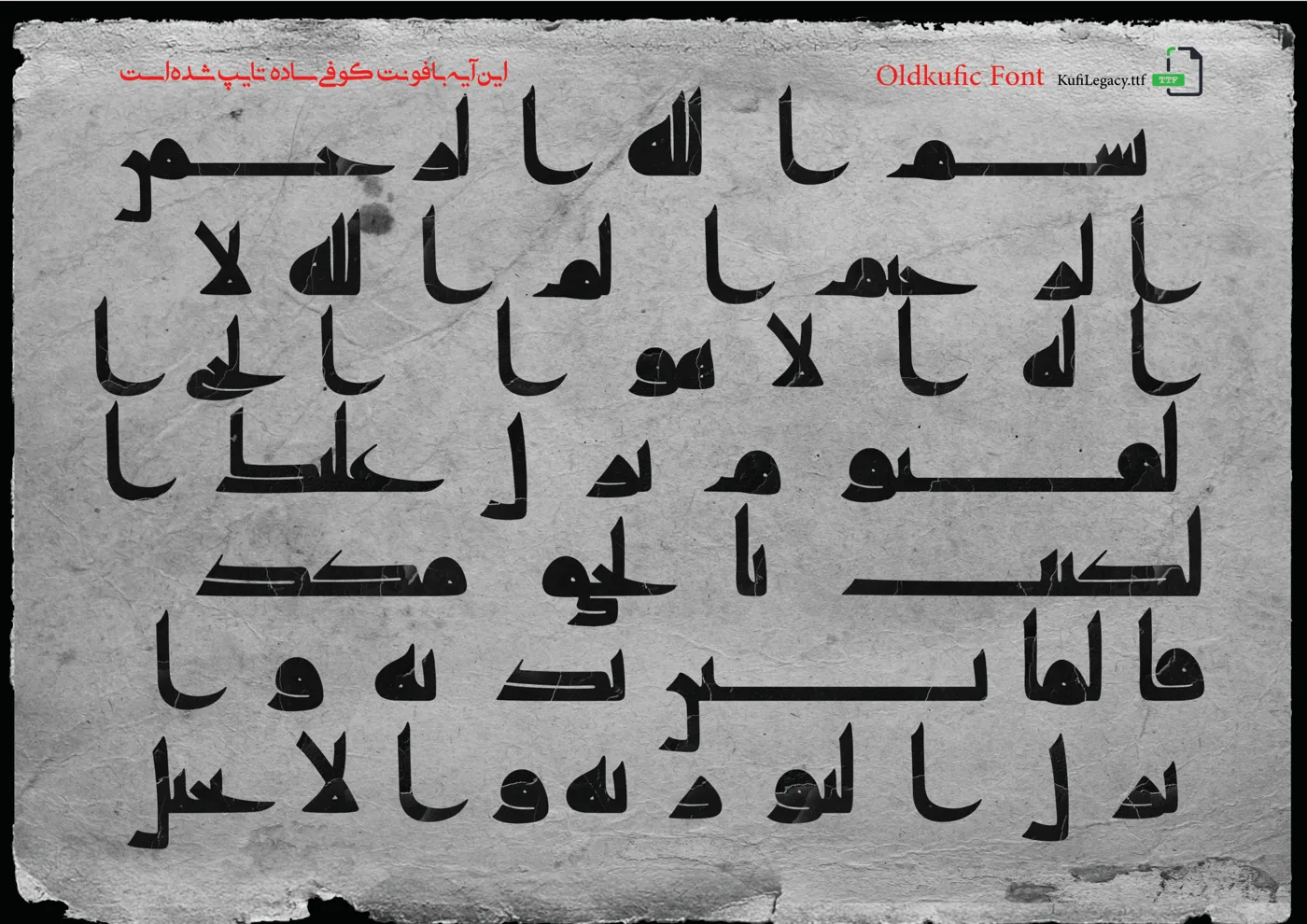
01 / Observe
Read letterforms in their material context: scale, pressure, proportion, irregularity and time.
Explore source ↗02 / Translate
Study a reconstructed writing system with historic forms, extended alternates and special connections.
Inspect forms ↗03 / Compose
Build contemporary compositions with direct control over the page, ink, marks and export.
See the Studio ↗THE TYPEFACE / A CLOSER LOOK
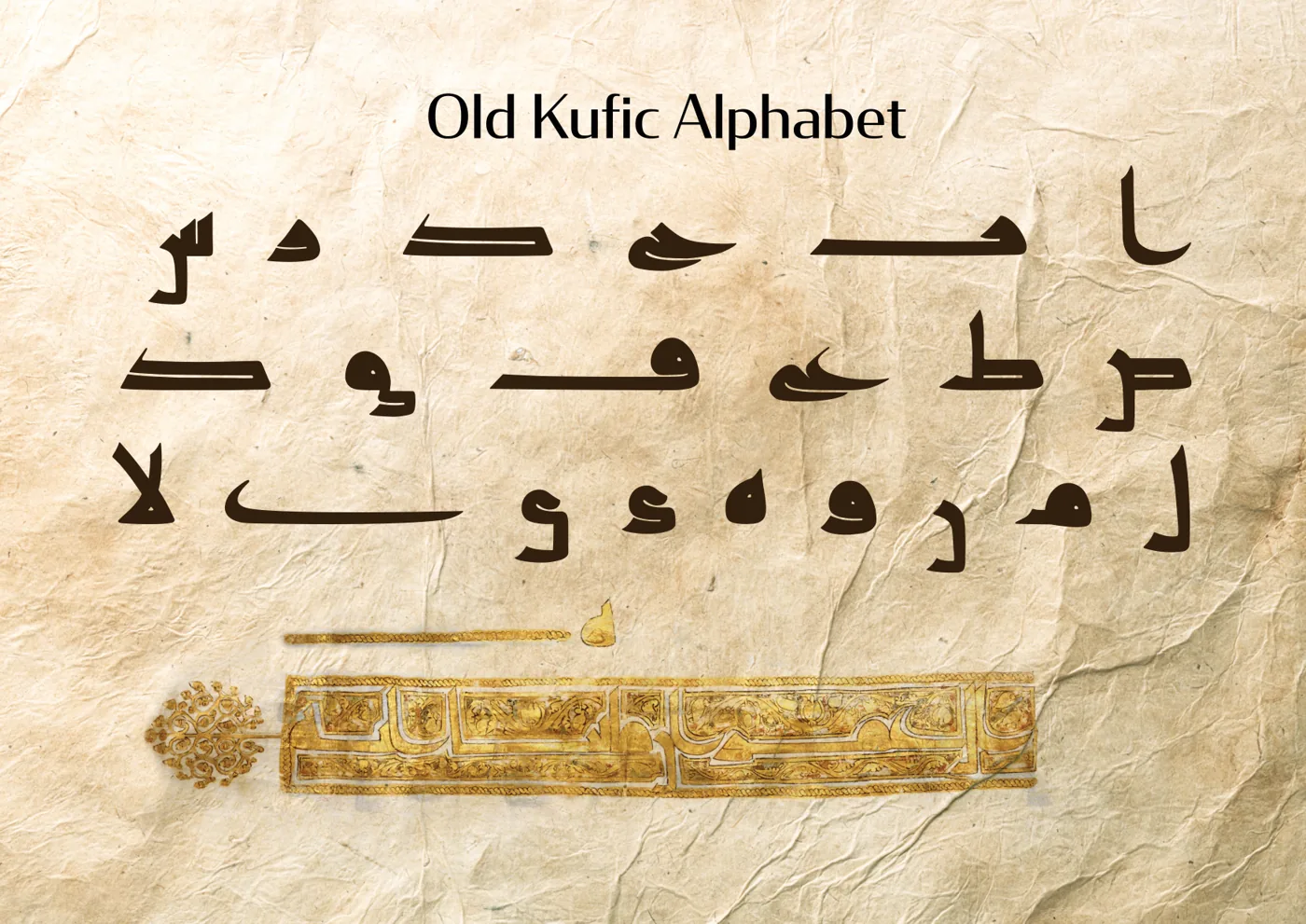
Nineteen specimens from the project catalogue, including the lām–alif ligature. Explore the individual forms and the way they connect.
THE ART OF JOINING
Ten connection samples reproduced from the reference site. Each is rendered with the project's own typeface.
04 The hand behind the system
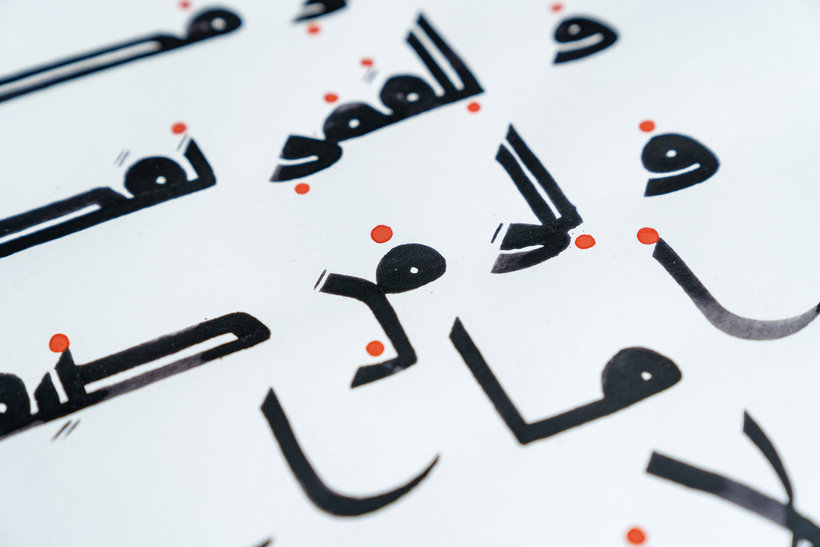
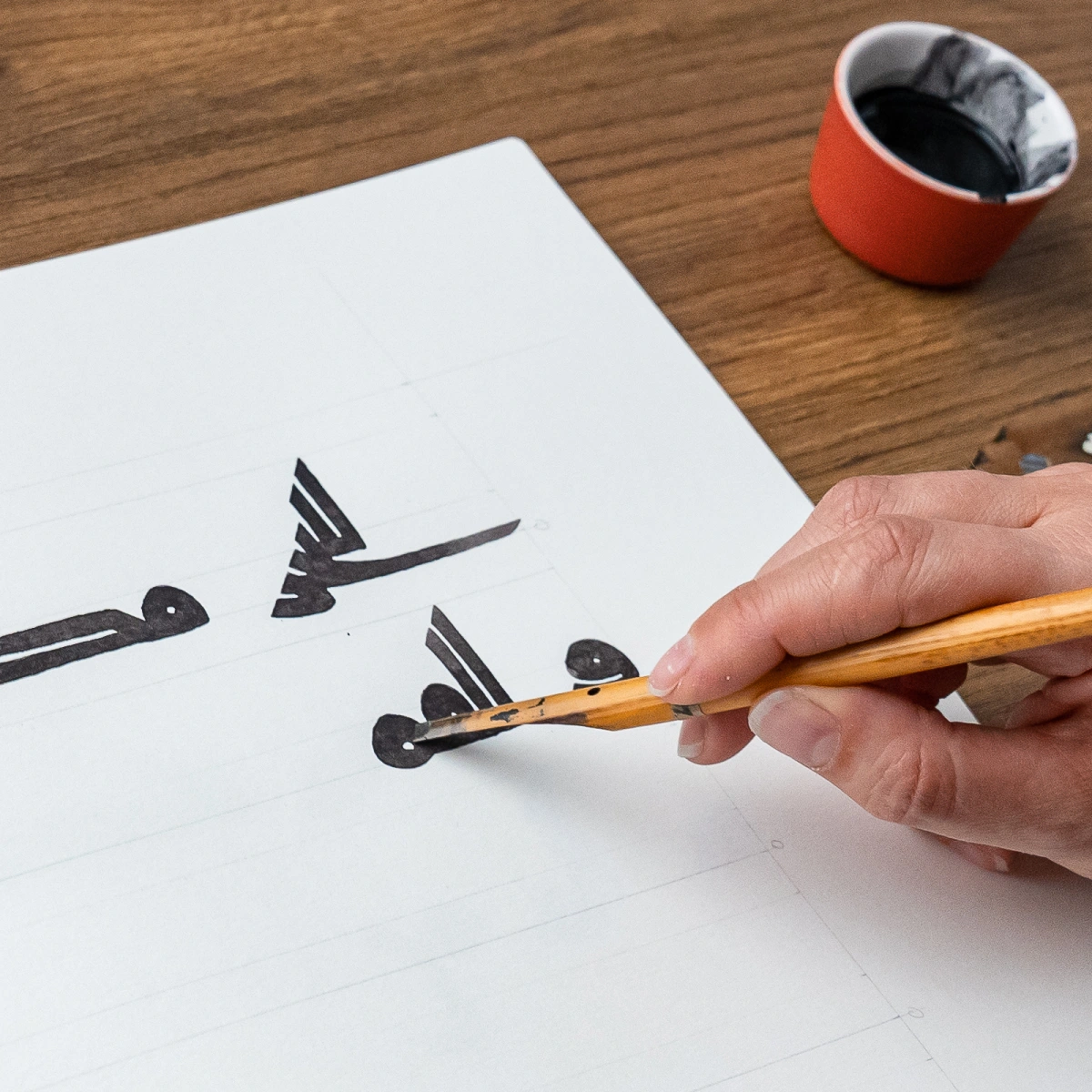
Cut reed. Wet ink. Repeated pressure. The digital system begins by observing what the hand actually does.
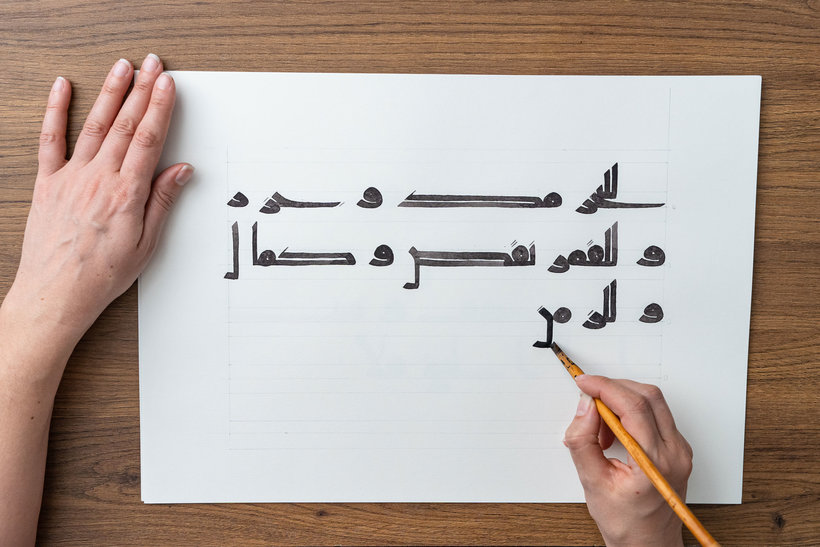
05 YOUR OPEN COMPOSITION STUDIO
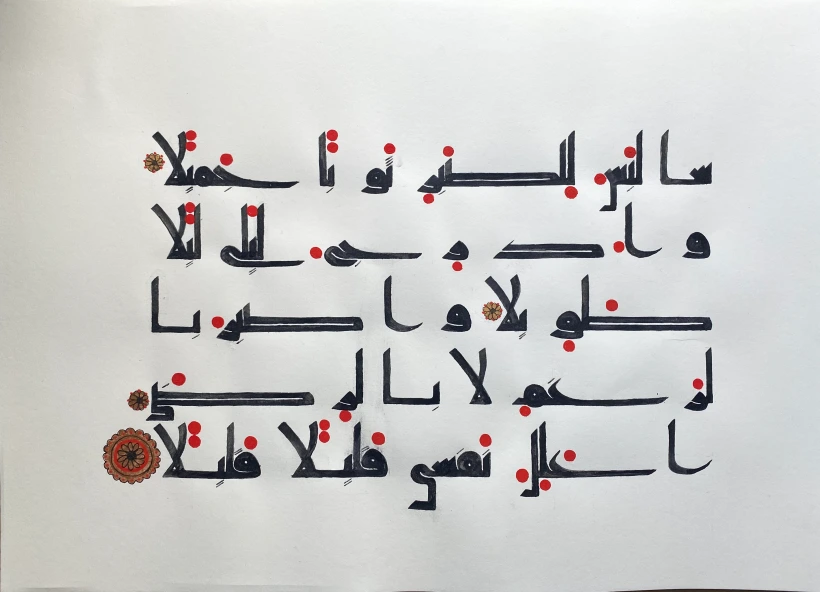
Make a poster, a square art print, a story or a panoramic inscription. Move the writing, place marks by hand, choose your paper and finish with ink or gold. Free to explore, with no account required.
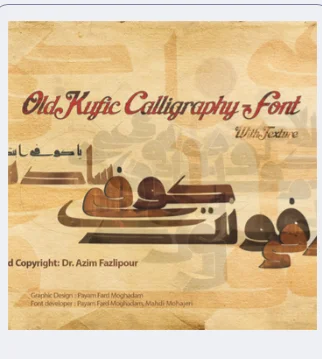
THE PRINTED ORIGIN
The catalogue brings the letterforms, historical references and special connections together. Its material palette and compositions form the visual foundation of this website.
Read the original catalogue ↗PDF · full illustrated presentation · opens in a new tab
06 Selected material
OPEN TO CREATE / SIMPLE TO LICENSE
The browser studio is free now. The font packages below are proposed launch prices; paid downloads are not yet on sale.
BROWSER STUDIO
Free
Available now · no account
PROPOSED / INDIVIDUAL
$19 once
For study and personal projects
PROPOSED / COMMERCIAL
$39 once
For independent client work
Proposed scope, subject to final licence terms and font release checks. Font redistribution and resale are not included. No payment is collected here.
| Capability | Free Studio | Personal · $19* | Commercial · $39* |
|---|---|---|---|
| Compose in your browser | Included | Included | Included |
| Posters, stories & inscriptions | Included | Included | Included |
| Downloadable desktop font | — | TTF | TTF |
| Client work with the font | Separate licence | — | Proposed inclusion |
| Webfont for a brand website | — | — | One website |
* Proposed one-time launch prices. Final terms will be published before sales open.
QUESTIONS / CLEAR ANSWERS
Short answers about the historical approach, the digital typeface and the free online Studio.
Early Kufic describes a varied field of angular Arabic writing associated with early manuscripts and inscriptions. It is not one fixed alphabet or a single uniform historical style.
No. The typeface is a historically informed reconstruction developed by comparing forms, proportions and connections across many early manuscript sources. It does not claim to reproduce one folio exactly.
No. Kufi Legacy is informed by early manuscript letterforms. Square Kufic is a later geometric construction system with a different structure and visual purpose.
Yes. The free Kufi Legacy Studio runs in the browser and lets you compose text, choose historic paper, place marks, adjust the layout and export a poster without creating an account.
The core historical font remains visually close to undotted early forms. In the Studio, dots and vocalisation marks are separate graphic elements that can be added and positioned manually.
Research and calligraphy are by Dr. Azim Fazlipour. Typeface design, digital engineering, website design and development are by Payam Fard Moghadam.
07 Begin with a line
 PAYAM FARDDesign with intention.